About Ammonium Bifluoride
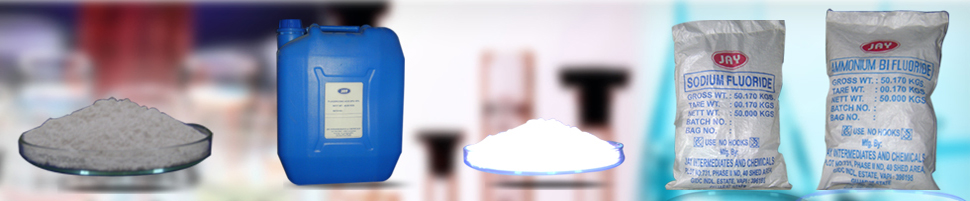
We have been highly appraised by our prominent clients for manufacturing and supplying Ammonium Bifluoride. We use premium quality components and advanced technologies in formulating this range of chemical compounds. The salient properties accomplished by our offered compounds are crystal cubic structure, white colored solid look and high melting point of 125 degree C. Ammonium Bifluoride offered by us is widely used in chemical & dye industries. This is also used to manufacture wood preservatives and solder fluxes.
Bifluoride Uses - Metal Cleaning, Etching, Pickling
- Glass Cleaning, Etching, Pickling
- Monument & Building Cleaning
- Oil Well Acid zing
- Bactericide in sugar industry
- Anodizing of aluminum
- Wood Preservative
- Other names: Ammonium bifluoride,
- Amonium hydro fluoride, ammonium
- Acid fluoride
Ammonium Bifluoride IdentifiersCAS number 1341-49-7
Ammonium Bifluoride Properties - Molecular formula [NH4] [HF2]
- Molar mass 57.043 g/mol
- Density 1.5 g/cm³, solid
- Melting point: 125 C (decomposes)
- Structure
- CsCl structure
- Coordination geometry: [NH4] + cation:
- Tetrahedral
- [HF2] Anion: linear
CAS No. 1341-49-7
HS Code: 2827.10
UN No: 1727
Formula: NH4HF2
Synonyms: Ammonium Difluoride
Physical and Chemical Properties
- Mol.Wt: 57.04
- Physical State: White Crystalline
- Specific Gravity: 1.5 gms/cc
Technical Specifications
- Assay: 98.00% min
- Fluorine as F: 65.35% min
- Ammonia as NH3: 29.24% min
- Heavy metals: 0.01% max
- Arsenic: 0.003% max
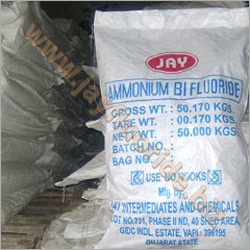
Packing: 50 kgs HDPE Bags
 Industrial Applications of Ammonium Bifluoride
Ammonium Bifluoride plays a vital role in glass etching, metal surface treatments, and specialized cleaning processes. Its strong chemical reactivity allows it to modify surfaces effectively, making it indispensable in industries such as glass manufacturing and metal finishing. The compounds high purity ensures consistent performance across various industrial tasks, contributing to quality results and operational efficiency.
Safe Handling and Storage GuidelinesDue to its highly toxic and corrosive nature, Ammonium Bifluoride should only be handled by trained personnel with appropriate protective equipment. Store it in well-ventilated, dry areas away from strong acids and bases, using only its original 25 kg HDPE containers with an inner liner. Adhering to safety protocols helps prevent accidental exposure and ensures a safer industrial environment.
FAQs of Ammonium Bifluoride:
Q: How should Ammonium Bifluoride be handled and stored safely?
A: Ammonium Bifluoride must be handled wearing gloves, goggles, and protective clothing, and only in well-ventilated areas. Store the substance in its original 25 kg HDPE drum with an inner polythene liner, away from strong acids and bases, and shielded from moisture to prevent hazardous reactions.
Q: What are the typical industrial uses of Ammonium Bifluoride?
A: This compound is primarily used in glass etching, metal processing, and as a cleaning agent in industrial contexts. Its ability to modify surfaces and remove impurities makes it valuable in the glass and metal industries.
Q: When is Ammonium Bifluoride unsuitable for use?
A: It should not be used in applications involving direct contact with food, pharmaceuticals, or personal care items due to its toxicity. Avoid using it where strong acids or bases are present, as dangerous reactions may occur.
Q: Where does Ammonium Bifluoride find its greatest benefit?
A: The greatest benefit is observed in industrial environments requiring efficient surface modificationsuch as glass manufacturing and metal surface treatmentsthanks to its effective chemical reactivity and consistent purity.
Q: What precautions should be taken during the use of Ammonium Bifluoride?
A: Ensure proper ventilation, avoid inhaling dust or fumes, and never ingest the substance. In the event of contact or exposure, follow emergency protocols immediately and seek medical attention.
Q: How does Ammonium Bifluoride react with other chemicals?
A: It is incompatible with strong acids and bases, and can react with acids to release toxic gases. Mixing with incompatible substances can result in hazardous conditions, so it should always be handled and stored separately.







 Send Inquiry

 Send Inquiry
